

Typing as the bottleneck
This post belongs to a small series of posts on the dangers of blindly pursuing efficiency in software development. The main post is The cost of efficiency. This post discusses the idea that writing code is the measure of a software engineer’s productivity.
The most common scenario in which I hear the dreaded words “That is not efficient!” is when people aren’t “working” at 100% capacity. People with no real experience in software development often think that if engineers aren’t typing, they aren’t being productive — after all, their job is to translate business requirements into code. So the engineer who writes the least code must be the worst engineer1? Conversations at the coffee machine, working with others on the same problem — all a waste of time. [Start sarcasm] If only people were like machines, we could get really efficient. We call them resources for a reason, right? The more output they generate, the better. [End sarcasm]
Writing code as the measure of productiveness
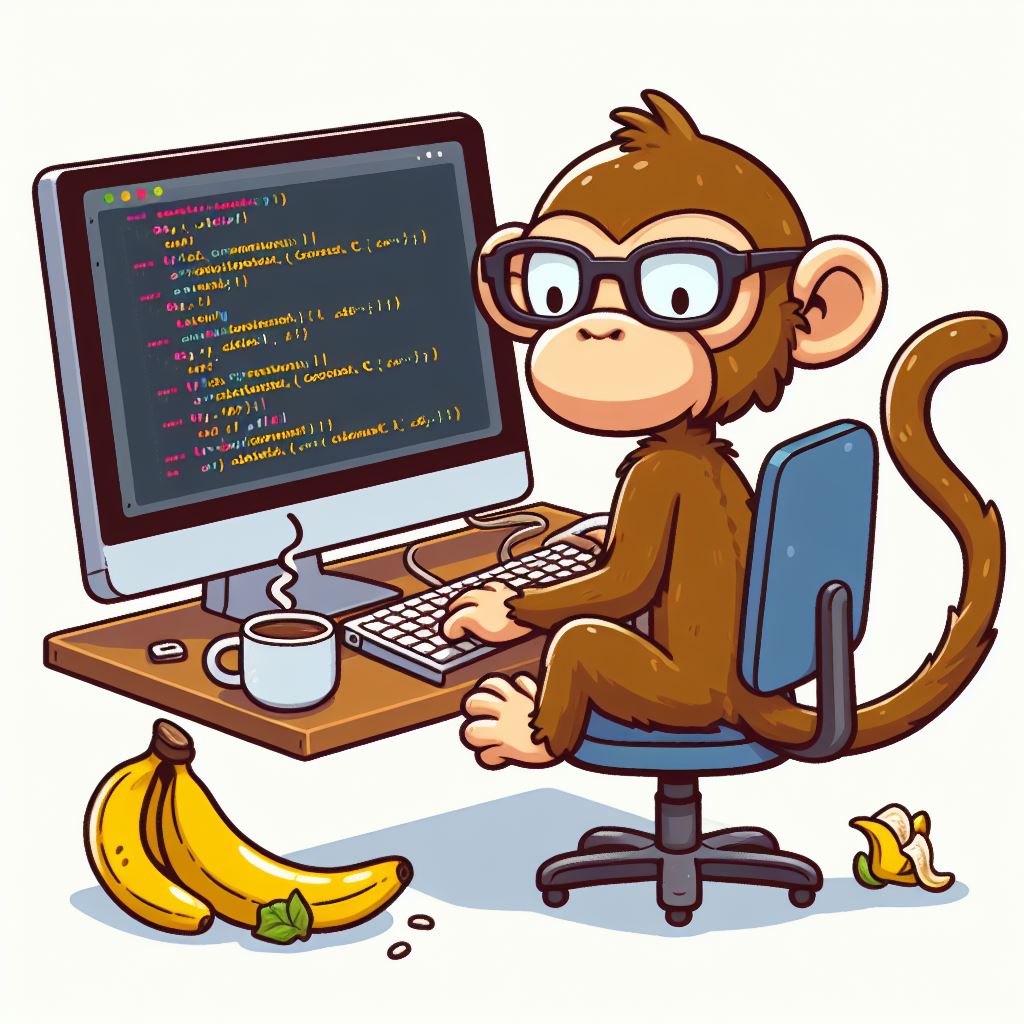 Software engineers are often seen as code monkeys
Plenty of software engineers hold this view too: that they must be writing code to be productive. After all, that’s what they’re paid for, right? Writing code.
“If I’m not writing code, I’m not being productive.” – a software developer
The consequence is that collaborative practices like pair programming or team (mob) programming get seen as a big waste of resources. Two people working on the same thing and only one of them typing? A whole team working on one thing, and only one person typing? What are all those other developers wasting their time on at the whiteboard — shouldn’t they be coding?
 That’s not efficient!
That reasoning would hold up if software engineering really were just translating business requirements into code — and if it were, we should all fear LLMs that can generate code on demand. But as any experienced software engineer knows, writing the code is the easy part.
 Typing is not the bottleneck
The push for maximum resource utilization frequently gets in the way of communication and collaboration. I’ve found it genuinely hard to get people to let go of their keyboard — to discuss the problem they’re trying to solve, to actually do some design. The drive to stay busy, to make sure no one is idle, pushes us toward output (code) over outcome (a solved problem): building the wrong thing fast, instead of solving the right problem.
We prefer building the wrong thing fast over solving the right thing well.
Conclusion
Software development is about learning and solving problems, not about typing. People aren’t machines that produce code, and problem-solving is hard to measure by how busy someone looks. Once a problem is actually solved, writing the code is often the straightforward part. A walk in the park can be more productive than two more hours staring at a screen, even though it doesn’t look like “work.”
Links
The blog posts in this series:


