

The cost of high Work In Progress (WIP)
This post belongs to a small series of posts on the dangers of blindly pursuing efficiency in software development. The main post is The cost of efficiency. This post discusses the cost of carrying too much work in progress.
When companies complain about slow software development, low-quality deliveries, or estimates that are exponentially off, the underlying cause is all too often a work-in-progress (WIP) level that’s way too high. The cause is straightforward: the drive to keep everyone fully utilized, combined with the fact that there is always more to do than the laws of physics allow. Customers want new features, sales wants to onboard a new customer if only we had this one killer feature… Before we know it, we’ve taken on more than we can chew.
“You can do anything, but not everything.”
Limit your work in progress
A high WIP has many causes. One of them is the drive for efficiency, for maximizing resource utilization: “If you have some free time in your agenda, you can squeeze in this extra task.” But there are plenty of other causes too. It even feels like we’re doing great work because we’re so busy, so hardworking — but instead of doing one thing great, we’re doing five things badly.
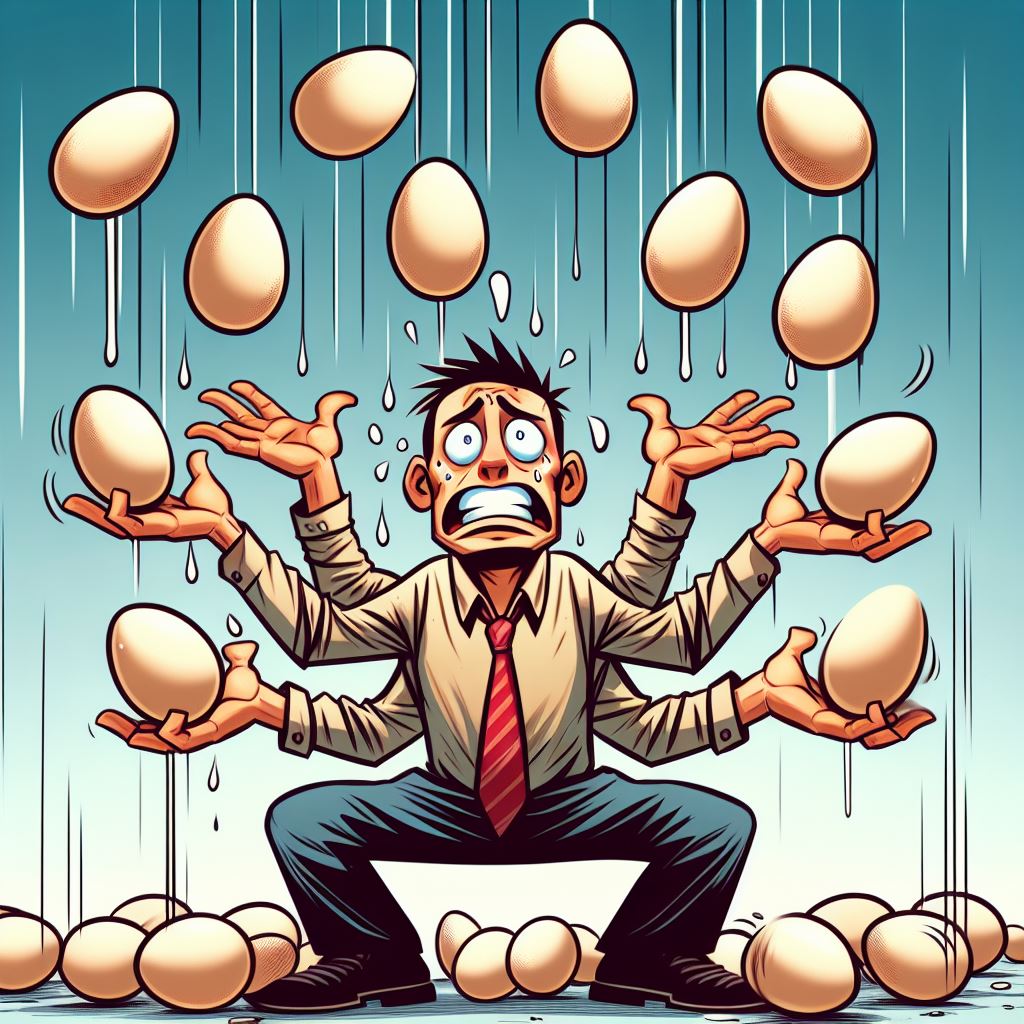 Focus on being productive instead of busy.
As discussed in The scope of efficiency, Lean treats a high WIP as a form of waste that leads to inefficiency, queues, decreased productivity, and reduced resiliency in a system or process1. It’s an easy thing to gloss over in an “efficiency” rant, but it is very important, because high WIP has several concrete negative consequences:
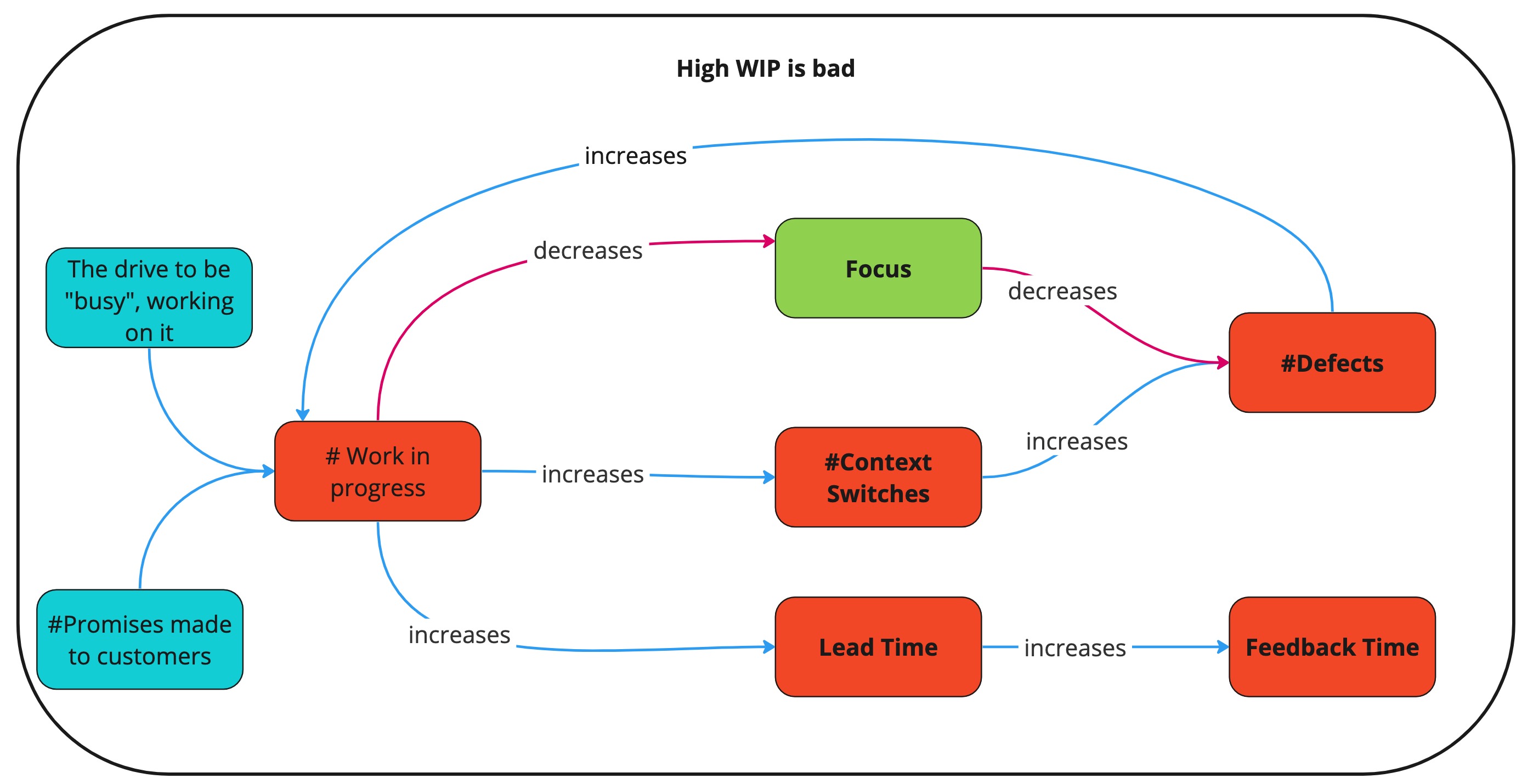 The consequences of WIP
“Work In Progress is the graveyard where good intentions go to die, buried beneath the weight of unfinished tasks.”
The danger of WIP in software delivery is that it’s often invisible, just like queues. We experience the consequences, but the WIP a team or company is actually carrying is rarely visualized. When we focus on solving a single task, we run the risk of forgetting all the other work in flight — context switches, interrupts, and defects are easily left out of the “plan”.
This is where Kanban comes in: it’s all about visualizing the flow and making WIP and queues visible.2
“The key is not to prioritize what’s on your schedule, but to schedule your priorities.”
If you’re going slow, have too much going on, and keep delivering poor quality, I have bad news: there’s no magic bullet. If you’ve taken on more than you can chew, no process will fix that. “Reduce WIP” can sound like “do less while the building is on fire” — but to finish faster, we need to do less at the same time. The waste that slows us down is the cost of juggling everything simultaneously. It may look efficient from a distance, but that view neglects the waste you can’t see.
“The shortest way to do many things is to do only one thing at a time.”
Think back to our restaurant: imagine it can handle 50 customers at a time. If we let ourselves get overbooked and 100 customers show up, we won’t even manage to give the first 50 decent value for their money. It would be a disaster.
 Don’t flood your “restaurant”
Important reminder: when everything slows down because of high WIP, remember Brooks’s law. Stated in 1975, it’s still true, and people still violate it all the time.
“Adding manpower to a late software project makes it later.”
New team members need time to get trained, to familiarize themselves with the project, its codebase, and its processes — and existing members need to invest time helping them. All of that takes time that’s easy to forget when software development is regarded as mainly “typing code”.
Too busy for resiliency
If the goal is maximum resource utilization, we aim to be busy. We strive to be “productive,” making sure no one is idle, spending as little time as possible on knowledge sharing, communication, and redundancy, since none of that delivers output by itself. We focus on concrete output, preferably with everyone working their own clear task, undisturbed.
That can work when everything is clear, well thought out, and nothing ever changes. I’m still waiting for that first software project. In software development, change and variability are the norm.
If everyone is busy and something unexpected happens, we have a problem. A feature changes, an estimate was wrong, someone changes their mind, a colleague falls ill — there’s no spare capacity to absorb any of it, because everyone is busy. Any well-thought-out execution plan goes down the drain, and the poor PM has to scramble for a new credible plan and rebuild all those Gantt charts.
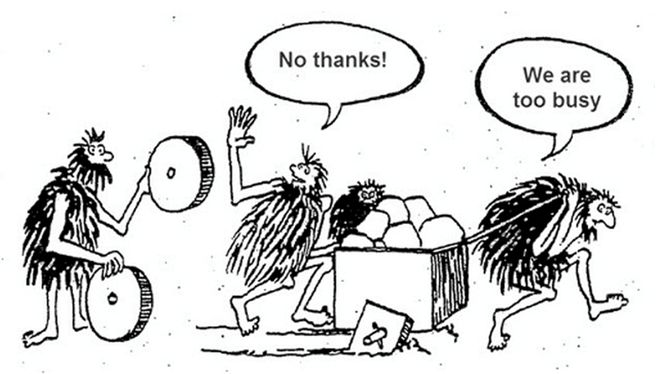 Too busy to improve
Invisible in all those pretty graphs is a knowledge problem: we can’t simply let Brent’s task be done by Max. There are specialized tasks that need specific expertise no one else can quickly step into, so we get blocked by a lack of knowledge. The bus factor tends to be low.
This comes back to the earlier point that the cost of efficiency is resiliency. Not being resilient can cost a lot more than what was “saved” by staying busy.
No room for unplanned work
In his post Your calendar == your priorities, John Cutler illustrates that valuable does not always mean efficient. Chasing resource efficiency, and micro-managing people to get there, comes at a cost. Software products need room for the unplannable: maintenance, learning, experimenting. As noted earlier, predictability isn’t always a good thing in product development — there’s typically high variance, and we should leave room for it. That can look inefficient in the short term, but it’s valuable in the long term.
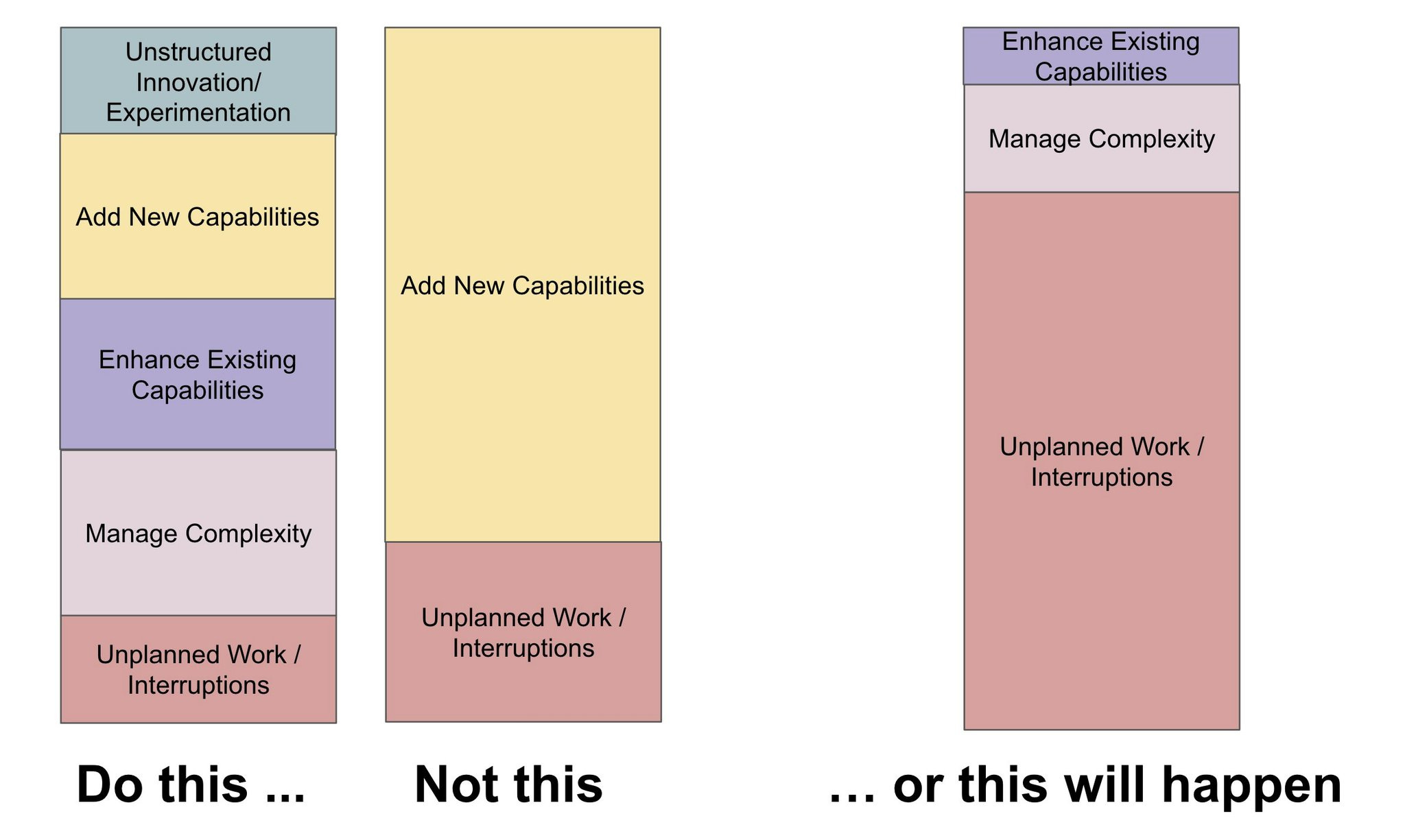 Sometimes the most valuable thing you could be doing is nothing.3
Conclusion
A high WIP is rarely a single bad decision — it’s the accumulated result of saying yes too often, in the name of keeping everyone busy. The fix isn’t a new process; it’s doing fewer things at once, so the things we do start actually finish. Visualize the work in flight, keep it small, and leave room for the unplanned. That’s what makes a team faster — not keeping everyone’s calendar full.
Links
The blog posts in this series:


